The question does not immediately offer an obvious answer, but it begins with one man: James Norris. A Canadian and heir to a grain-trading empire, he moved to Chicago to continue the family business, quickly enlarging its reach and influence. Through sharp strategy and relentless ambition, he built a portfolio that stretched far beyond grain, growing into grain elevators, cattle operations, and even a shipping line.
Norris developed an obsession with hockey at a young age and played with the Montreal Amateur Athletic Association's hockey team. This athletic club had earned national recognition in Canada for its success in bicycle racing. Its emblem was a bicycle wheel augmented with wings, an ancient shorthand for speed dating back to Mercury. This emblem was dubbed a “winged wheel,” and the club became known as the “winged-wheelers.”
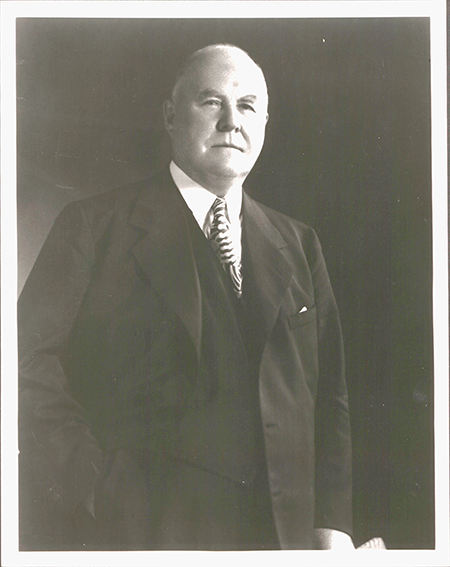
c. 1940s portrait of James Norris.
Pro Hockey Comes to Detroit
In 1926, a group of Detroit businessmen purchased the Victoria Cougars hockey team, moved the club across the border, and renamed them the Detroit Cougars, expanding the young National Hockey League to ten teams. After the original roster retired or dispersed, the franchise held a fan contest in 1930 to select a new identity. The winning name, the Falcons, prevailed over other suggestions such as “Ambassadors,” “Dynamics,” and “Wanderers,” all arguably stronger options.
The team played at Detroit Olympia, known locally as Olympia Stadium, which had opened in 1927. But by the early 1930s, Detroit’s hockey club was facing severe financial trouble. The Falcons had never finished higher than third in their division, fan support lagged, professional hockey in the city wavered, and even the Olympia had been foreclosed upon. Coach Jack Adams captured the desperation of the moment with characteristic bluntness: “If the greatest star in the game was made available to us for $1.98, we couldn’t have afforded him.”
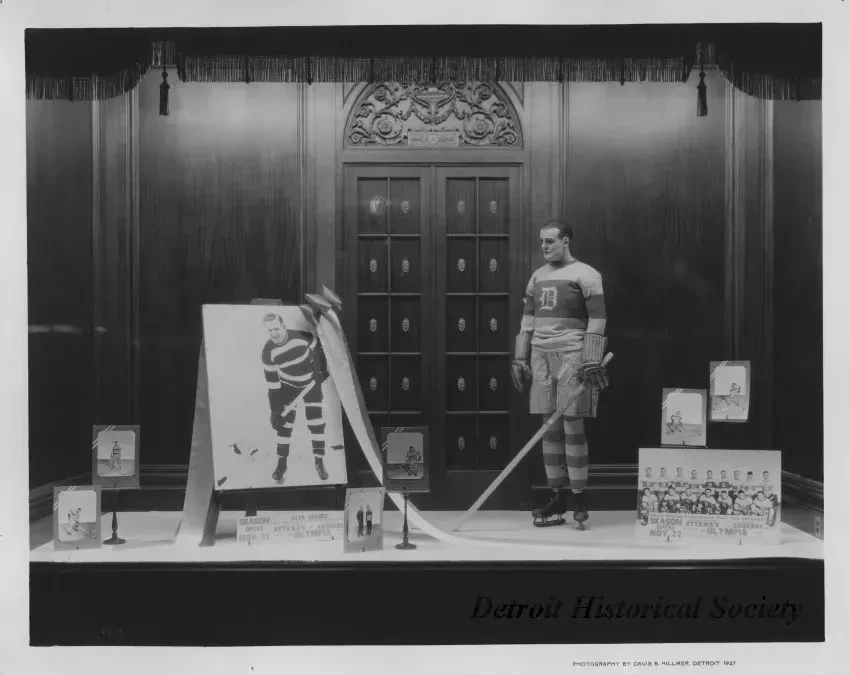
c. 1927 black and white photographic print of a window display at Kern's Department Store. A mannequin is dressed in hockey gear including gloves, stick, skates and sweater of the Detroit Cougars. Detroit Historical Society collection.
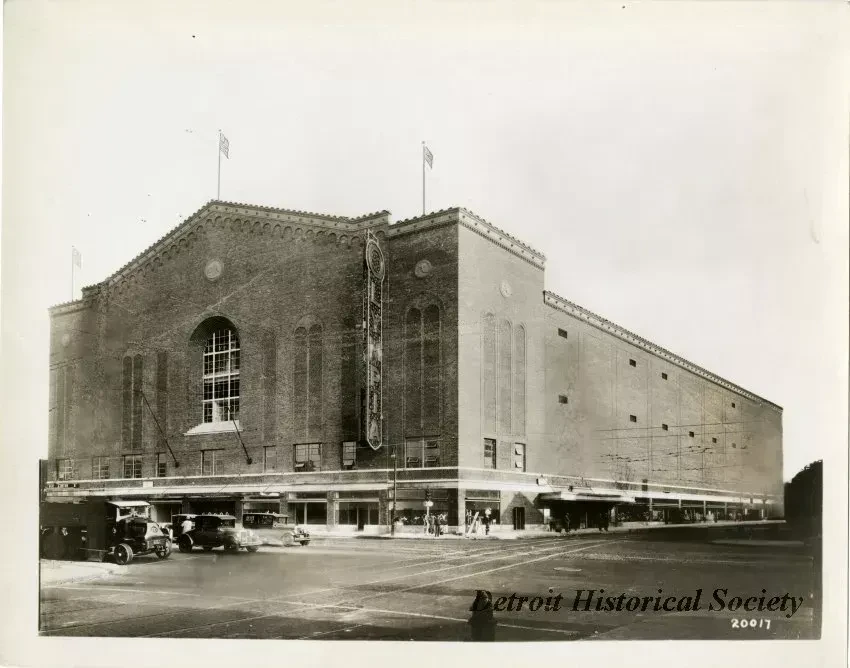
c. 1927 photograph of Olympia Stadium. Detroit Historical Society collection.
During this same period, James Norris was pursuing a very different vision of hockey’s future. Convinced that Chicago could support two NHL teams, just as it did with baseball and football, he attempted to establish a second franchise in the city. The Blackhawks’ owner repeatedly blocked the effort, leading Norris to take a different route. In 1931, he purchased Chicago Stadium itself, the very home of the Blackhawks.
Becoming the Red Wings
With Detroit’s club on the brink of collapse, Norris turned his attention across the lake. First, in 1932, he bought Olympia Stadium from the bank. Shortly afterward, he purchased Detroit’s hockey club as well, setting the stage for the transformation that would soon give rise to the team we now know as the Red Wings. When Detroit took the ice for the 1932–33 season under new ownership, they skated under a new name, the Red Wings, and in new uniforms featuring a dark red sweater and a bold, custom-designed winged wheel logo. Today the symbol is iconic, but in 1932 it might have seemed unusual, because it was built entirely from Norris’s own experiences.
The wheel-and-wing motif came directly from the emblem of his youth. Norris removed the bicycle wheel of the Montreal AAA’s winged-wheelers symbol and replaced it with a wheel representing Detroit’s signature automotive industry. The wheel appears to be a generic pattern common to the late 1920s and early ’30s, strongly resembling the simple wire wheel of the Ford Model T, though it also resembles the flashier Kelsey-Hayes wire-spoke wheel popular at the time.
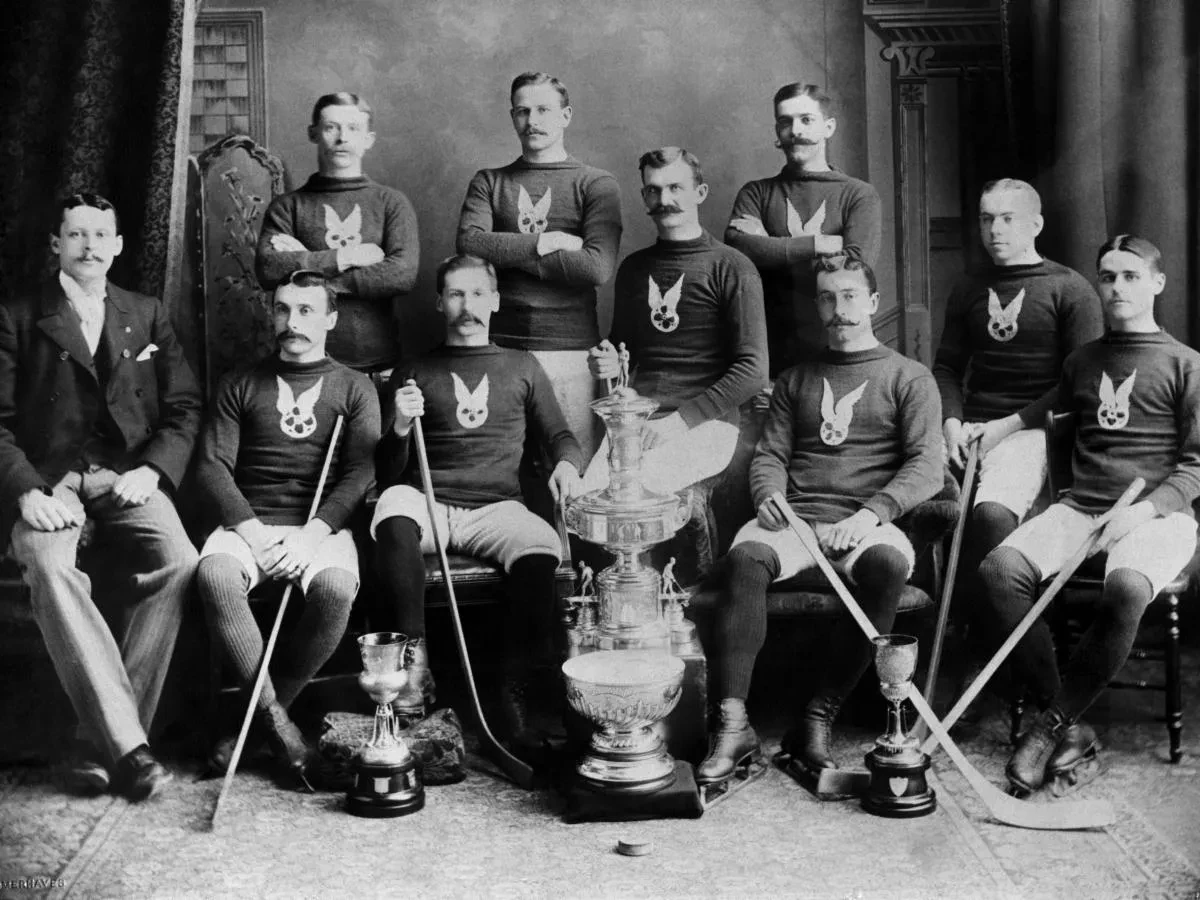
c. 1893 The M.A.A.A. Hockey Team clinched the Canadian Championship title in 1893, defeating Winnipeg 7 to 4. It became the first team to win the prestigious Stanley Cup. Montreal Athletic Association.
But why red? That detail also traces back to Norris. He had increased his family’s wealth by expanded their business interests into Great Lakes shipping, financing the Upper Lakes Shipping Company in 1931, just a year before purchasing the hockey club. The company’s flag featured a black diamond on a red background, and the same emblem appeared on the ships’ smokestacks.
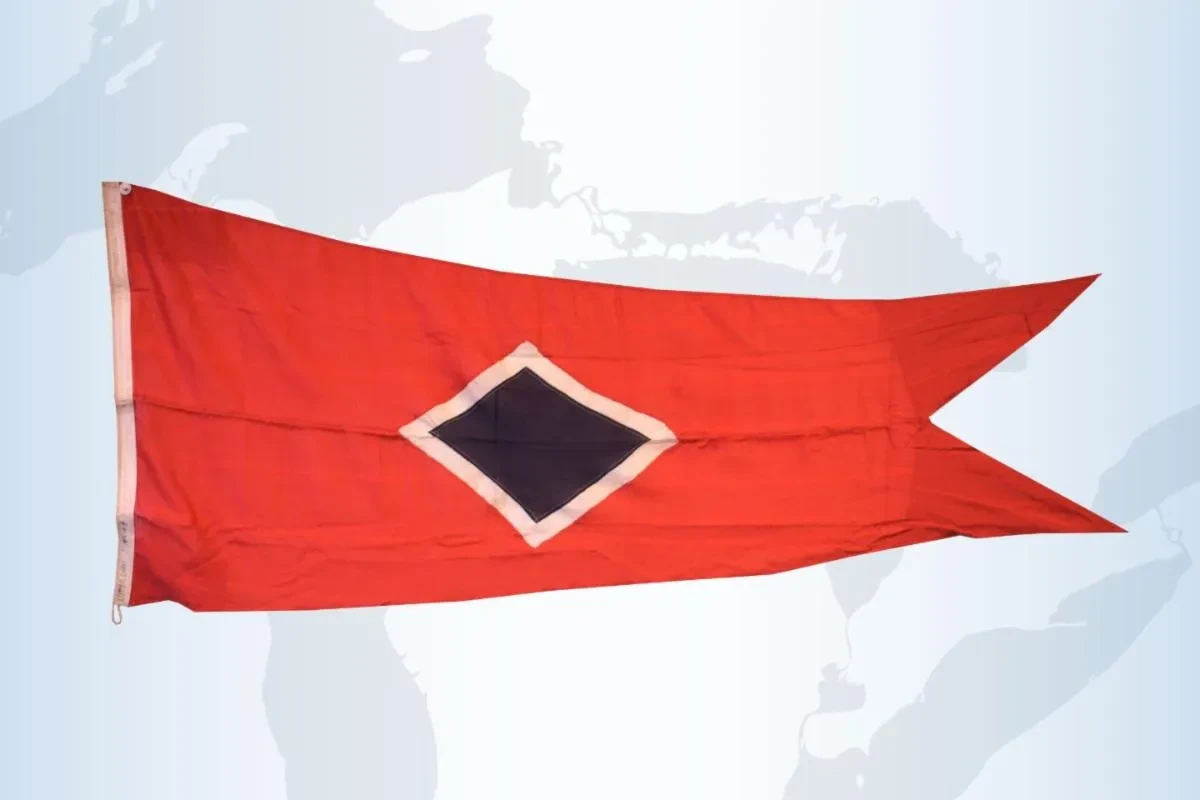
Upper Lakes Shipping Company flag. National Museum of the Great Lakes.
So, the Red Wings’ identity is a blend: the symbol of Norris’s athletic youth, the color of his shipping enterprise, and the industrial heart of Detroit—all fused into what many consider the greatest logo in hockey, a perfect visual expression of the team and the city it represents.
Yet when the name and logo debuted in 1932, the Detroit Free Press took a decidedly understated view, writing: “They’re the Red Wings now, which may or may not help in the very important matter of getting goals.”
Learn more
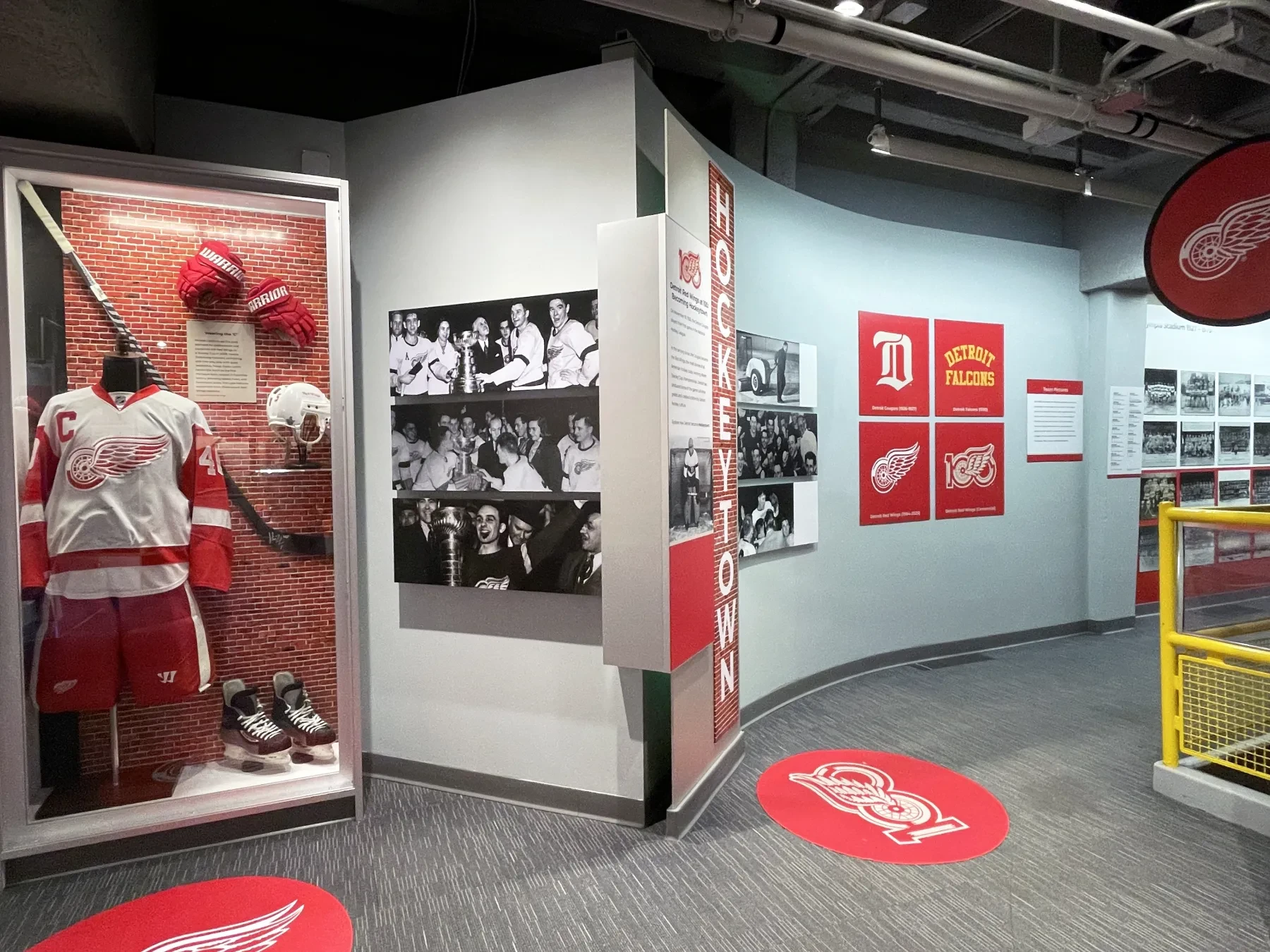
Learn more about the team’s long history in our online encyclopedia and the Detroit Historical Museum exhibition Detroit Red Wings at 100: Becoming Hockeytown - it's on display through January 2027!